Changing Course in 2014

As usual in the beginning of the year I think of all the millions of things that I want to do and this year I’m going to start with focusing on one thing.  It’s a huge thing, sort of overwhelming at times, but, I think I need to do it …… and it will consume the whole year.

For the past two years I’ve been participating in PiBoIdMo (Picture Book Idea Month) held in November – which is a challenge that Tara Lazar has organized. So, now I have two files of ideas, about 65 in all (not all good ideas) and it seems there ought to be something worth pursuing. http://taralazar.com

This year I’ve joined Julie Hedlund’s group – 12 x 12 in 2014, which is a writing challenge to write 12 children’s book drafts during the year, one a month, from the ideas generated in the aforementioned idea challenge. http://www.juliehedlund.com/

So I’m challenged and motivated to get some work done this year.

12-x-12-new-badge

Happy New Year!

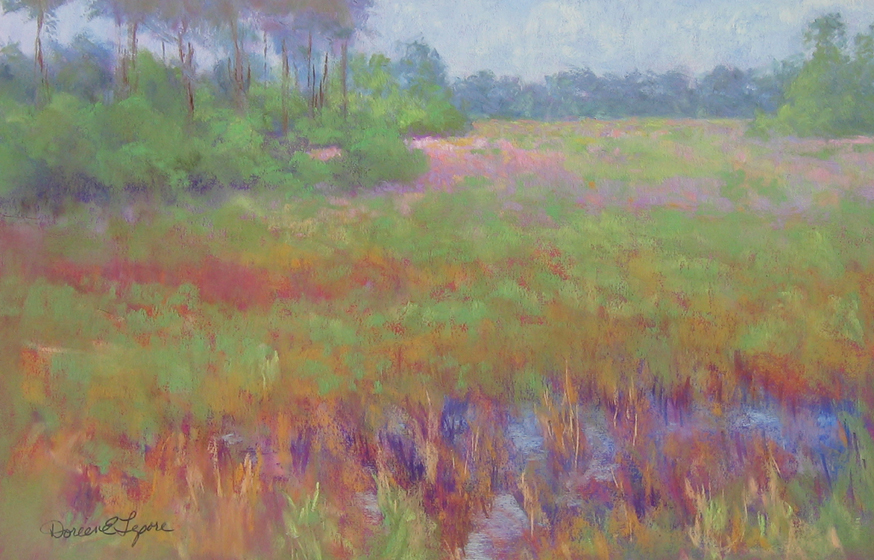
Spring Marsh
Spring Marsh

This pastel painting hangs in the dining room framed in gold. The glass is reverse painted in black with a gold leaf border. This view is from the front entrance of The Arbors, where I live. It was done some time ago and is still a favorite of mine.

Palette Talk

Originally my plan was to write about Sorolla and his palettes, however while researching I found the definitive article written on Sorolla, his palettes and technique. The article was written in 1990 by Charles Sovek as a cover article for The Artists Magazine.

The article is here:  http://www.sovek.com/publications/articles/sorolla/index.htm

Sorolla’s palettes were different for portraiture or outdoor landscape, as stated in the article:

“Varying with the subjects he painted, Sorolla used essentially two different color palettes. For studio portraits, he favored one that included black, burnt umber, raw umber, rose madder, burnt sienna, raw sienna, yellow ochre, Naples yellow, vermilion and cobalt blue. Occasionally he would add orange, pink or purple, but he usually emphasized strong tonal contrasts over ambitious color effects. His outdoor palette was completely different and included cobalt violet, rose madder, all the cadmium reds, cadmium orange, all the cadmium yellows, yellow ochre, chrome green (since replaced by permanent green light), viridian, Prussian blue, cobalt blue and French ultramarine. In both cases, he used lead white.”

Unfortunately Charles Sovek passed away in 2007, however his website remains and is loaded with valuable information and is maintained by The Charles Sovek Estate.

http://www.sovek.com/index.htm

On the top of his section “Speaking of Art” he talks about the palette based on the color wheel, or a rainbow palette, which is similar to what I use, sometimes less and sometimes more, depending on what I’m painting, but a good color wheel palette in any medium keeps your paintings bright and less muddled.

Sovek’s suggestion is: Dioxine purple, permanent rose, cadmium red light, cadmium orange, cadmium yellow medium, cadmium yellow light, thalo green, cerulean blue, ultramarine blue, white, black.

Personally, most of the time I don’t use the purple, thalo green, cerulean blue or black and try to mix those instead. Sometimes I’ll use thalo blue (carefully – it’s a strong color). Also I use Veridian. But basically it does stay fresh and is a rainbow palette.

In the past I’ve discussed palettes for pastels and do in fact use different palettes for portraits and landscapes, more earthtones for the portraits and more of a color wheel selection for landscapes.

Because of copyright issues I haven’t included one of Sovek’s paintings here but strongly urge you to visit the website and look through his galleries as well as the “Lessons from the Easel”. He was a wonderful painter and teacher. You can get his books and dvd’s there also.

This website is also interesting, Sorolla’s paintings and biography:

http://www.joaquin-sorolla-y-bastida.org/


Soap box

Normally I’m the last person to get on a soap box about anything, preferring to keep my opinions to myself – most of the time – but this morning there was an interview on the Today Show that so annoyed me that I had to share part of the transcript with anyone that cares to join me in my anger.

“Binky begone: Latin singer Thalia has new children’s book

Popular Latina singer Thalia has written a children’s book titled “Chupie: The Binky that Returned Home” and says that the story provides children with their first experience of letting go.”

Here is the offending bit of the interview:

Matt Laur asks:  ”  — by the way, the illustrations in the book are wonderful and i know that’s a hard thing for a first time author of a children’s book to come up with the right  illustrator. how did you do that?

>> i’m very creative and it’s like my hobby is paint and i did all of these illustrations so it took me two years to find the right illustrator that would capture my essence and respect the castle, the lollipops, everything. i got that person and we created this magic kingdom and then the most important are the steps to help your kid getting rid of the pacy. what i think is its the first appearance of getting — letting go. you know, for a human being it’s very difficult to let go so for a baby it’s terrible. so it’s the first experience to let go and it’s okay.

>> great advice for parents. are you going to do more.

>> yes. this is my fourth. this is the first child book and i’m very excited.”

How very unprofessional, selfish and outright wrong of her to refer to the illustrator as “that person”. (the bold italics are mine) 🙂

She outright refused to give any credit to the illustrator.

So, this is a warning to illustrators, if this woman calls you, don’t answer.

Thanks, I feel better now.

Molly’s House Gallery

For locals – here is the season’s schedule for Molly’s House Gallery in Stuart, FL:

2013 2014 Gallery Flyer

My mostly beach themed paintings will be there in December, from the 5th until the end of the month.

Molly’s House is a 501(c)3 hospital hospitality house, providing temporary lodging for adult and children patients and their families who are receiving medical care on the Treasure Coast.

www.MollysHouse.org


Flor 500

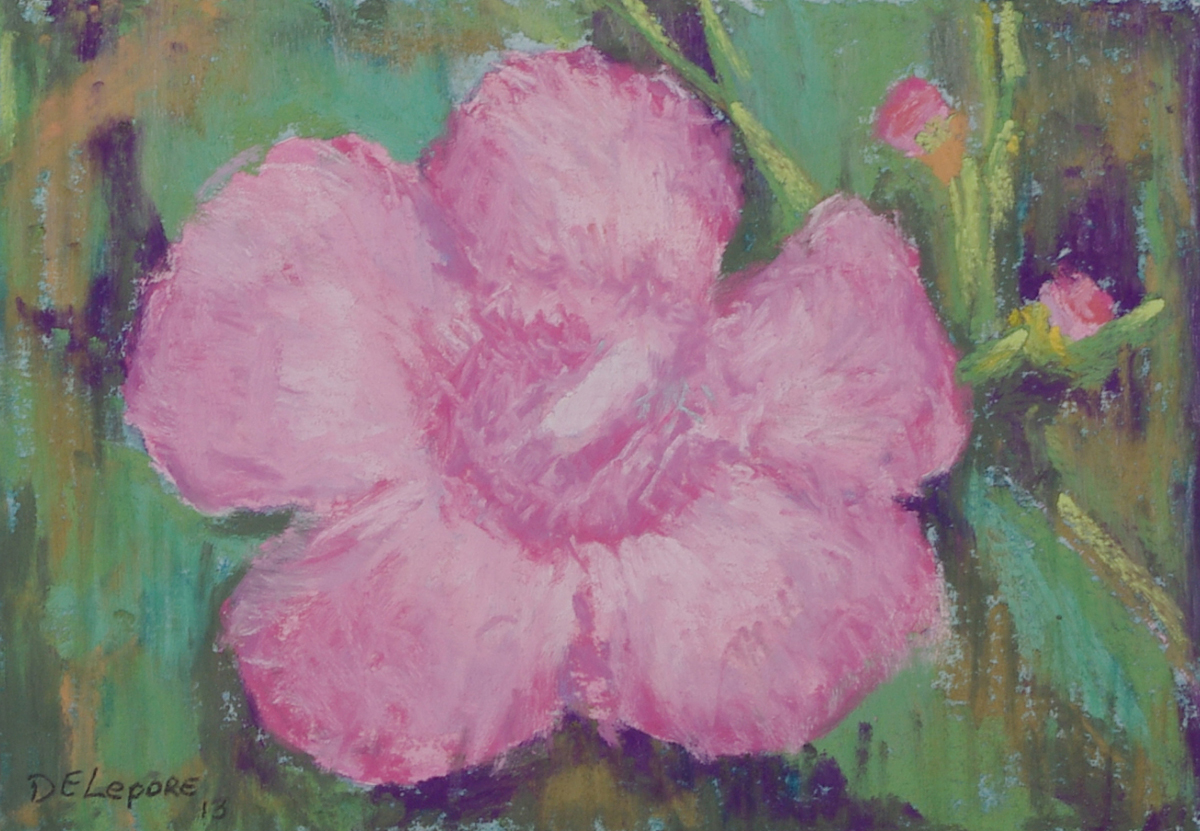
Flaxleaf False Foxglove

But, more specifically Flor 358Flaxleaf False Foxglove (Agalinis linifolia)

http://www.xaviercortada.com/?page=FLOR358

also on facebook:

https://www.facebook.com/photo.php?fbid=653289241357126&set=a.512453442107374.122054.258164304202957&type=1&theater

The wildflower that I painted as part of a special project:

“Five hundred Florida artists are sought to create art for FLOR500, a participatory art, nature, and history project that marks the importance of the moment when the history of Florida changed forever and gives a glimpse of what its landscape was like 500 years ago. Developed by Xavier Cortada, director and artist-in-residence of FIU’s College of Architecture + The Arts’ Office of Engaged Creativity, the project commemorates Florida’s quincentenary in 2013.”

If you are a Florida artist this project is still open until December 2013.

Photo reference credit is due, Jeffrey S. Pippen, http://www.jeffpippen.com/ who allowed me to use his photograph for my painting of the false foxglove flower.

Pastels seemed to be the right medium for this soft looking flower. Starting with a watercolor underpainting on Wallis sanded museum paper, pastels were applied in several layers without blending to achieve a painterly look.


Seabreeze

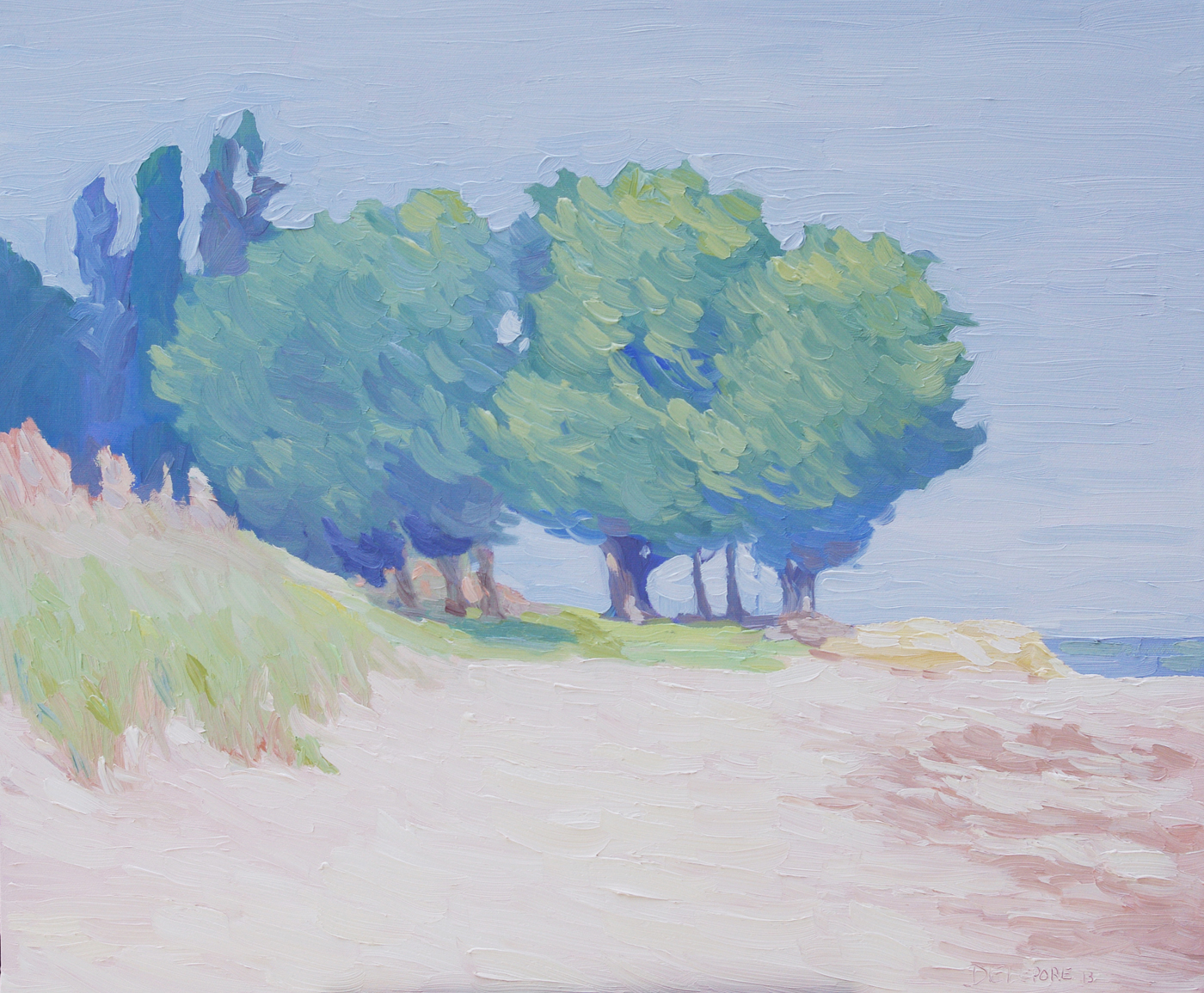
Seabreeze - Oil on Canvas - 20x24
Seabreeze – Oil on Canvas – 20×24

These trees are piney and I don’t know the name of them but I like the way they lean toward land as if the breeze showed them which way to grow. This is at the northern end of Hobe Sound Beach.

This painting isn’t huge but consumed a lot of paint. The paint was thickly applied with a fully loaded brush.  It’s a high key painting with hardly any darks.

Barley Barber Swamp

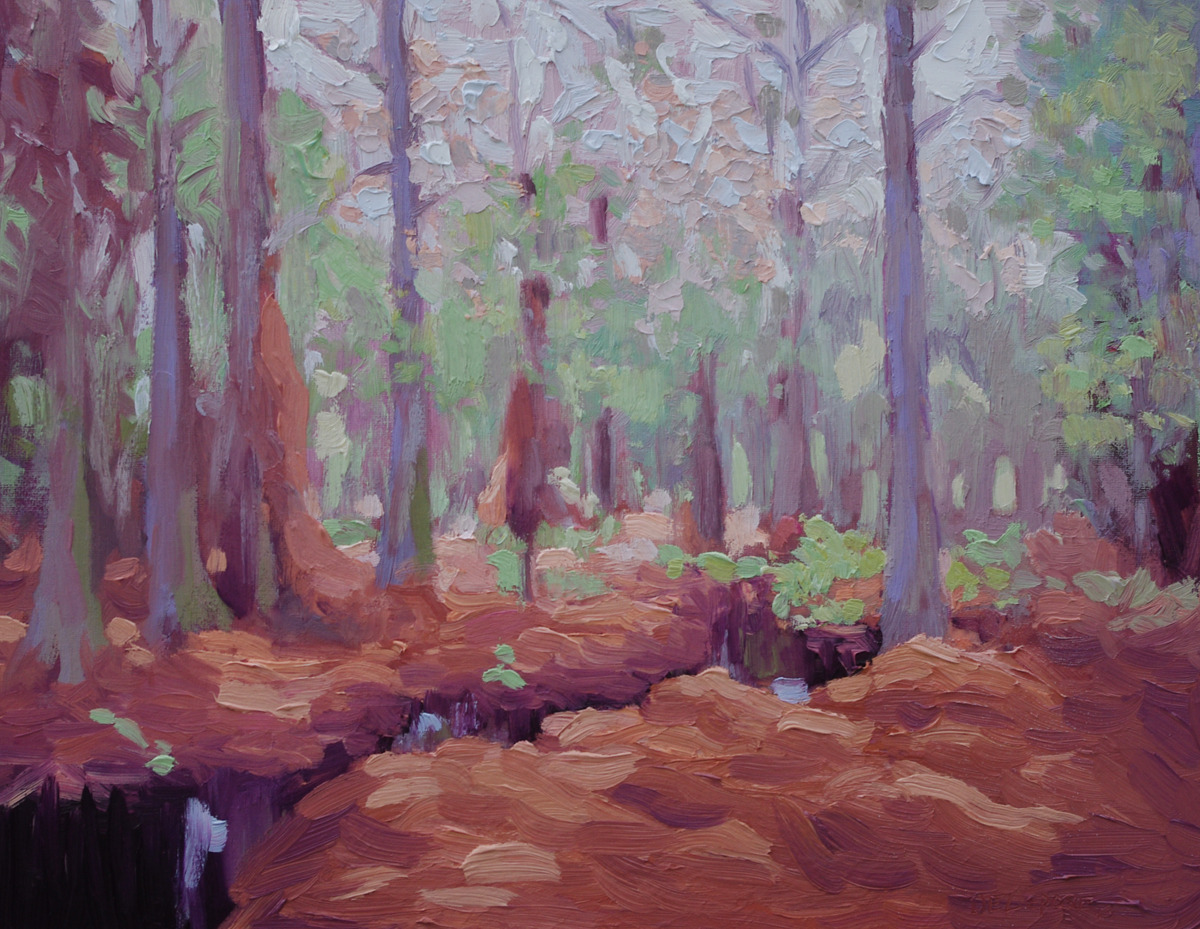
Barley Barber Swamp
Barley Barber Swamp – oil on board – 11×14

The only way to get to Barley Barber Swamp is to be taken there by bus. It’s located in the middle of FPL property in Indiantown, FL.  This link tells you more about how to get there if you’re local:  http://www.treasuredlands.org/blog/news and this one tells you more about the swamp:  http://www.barleybarber.org/

Once you get to the Seminole Inn and hop on the tour bus you get a bumpy ride past the FPL plant and arrive at the swamp in the middle of nowhere but is actually close to Lake Okeechobee that you can’t see from there. The tour follows a windy boardwalk through the ancient cypress swamp that is host to otter eating gators, many tree frogs and assorted rarely seen vegetation.

Toward the end of the boardwalk tour I captured several shots of the most beautiful area of the swamp where all the cypress needles had turned the land into a carpet of red. It would have been even more stunning if the sun were out that day.